Skip to content

You are in bed at midnight. Your body feels tired, but your mind keeps racing. About one in six adults deal with insomnia, so you are far from alone. Lots of people try a deep sleep supplement to find relief. Store shelves are crowded, though, and labels can feel confusing. We want to make this choice simple for you.
Why You Can Trust This Guide
We have spent years reading supplement labels, comparing studies, and helping friends sort through sleep products. We learned one lesson fast. Marketing is loud, but the label tells the real story. For this guide, we also leaned on pharmacist-reviewed sources and the National Institutes of Health.
What a Sleep Supplement Can and Cannot Do
Let’s start with an honest point. No supplement is proven to boost your deep sleep stage. Instead, the right ingredients may help you relax and drift off more easily.
Habits still matter most. Experts recommend cognitive behavioral therapy for insomnia (CBT-I) as the first choice. Good sleep habits come next. Think of a supplement as a helper, not a fix.

Step 1: Know Your Sleep Problem
First, ask yourself one question. Do you struggle to fall asleep, stay asleep, or both? The answer shapes your choice. GABA, for example, may help you fall asleep faster. It does not seem to help you stay asleep longer. So if you wake up at 3 a.m. every night, GABA alone may disappoint you. Also think about your medicines and health conditions. They affect which ingredients are safe for you.
Step 2: Learn the Common Ingredients
Here are the ingredients we see most often, and what each one does:
● Melatonin: Your body makes it in the dark. It has the strongest research behind it and may help you fall asleep faster.
● L-theanine: This amino acid is found in tea. It may help you relax without feeling drowsy, and its main role seems to be easing stress.
● GABA: This calming brain chemical may shorten the time it takes to fall asleep. It can take one to eight weeks to show effects.
● Magnesium: Sleep research is mixed. It may help if night leg cramps keep you awake.
● 5-HTP and tryptophan: These help your body make serotonin and melatonin. They can clash with antidepressants, so check with a professional first.
● Vitamin D: Low levels are linked to poor sleep. A blood test can tell you if you need more.
Do Herbal Ingredients Help?
A deep sleep herbal supplement usually includes valerian, chamomile, or passionflower. These plants have a long history of use for sleep. The research is lighter, though. Valerian studies show mixed results, but it is likely safe for 28 days or less. Chamomile may improve sleep quality, but it does not seem to help insomnia. Passionflower has few quality studies. Herbs can be gentle options, but we would not expect miracles.
Step 3: Check the Dosage
Dose matters as much as the ingredient. Here are amounts used in research:
- Melatonin: Start around 2 mg, one to two hours before bed. Doses over 8 mg are not recommended.
- L-theanine: Studies often used 200 mg. The FDA recognizes up to 250 mg as safe.
- GABA: Studies used 100 mg to 300 mg.
- Valerian: Studies often used 400 mg to 600 mg.
Start low and go slow. Change only one thing at a time so you can see what works. More is not always better, and high doses can cause nausea or dizziness. Always follow the serving size on the label.
Step 4: Judge the Quality
This step is where many people trip up. Supplements are not regulated like prescription drugs. That means a product may contain different amounts than its label claims.
Here is how we check quality:
● Look for third-party seals: Groups like USP and NSF test products for purity and label accuracy.
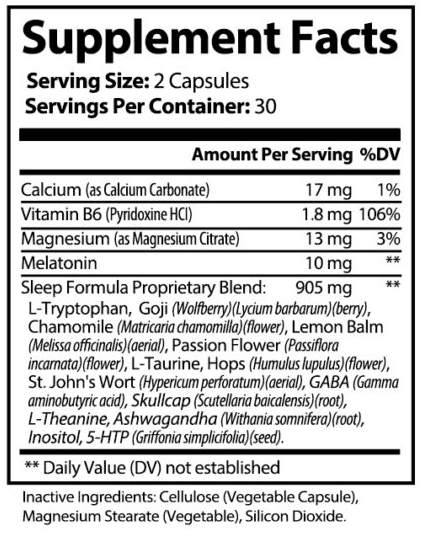
● Read the Supplement Facts panel: Each ingredient should list its exact amount.
● Avoid proprietary blends: These hide how much of each ingredient you get.
● Buy from trusted sellers: Check the expiration date and the maker’s contact details.
Step 5: Single Ingredient or Combination?
A single ingredient is easy to track. If you feel better or worse, you know the cause. A sleep formula supplement blends several ingredients into one product. That saves time and can cover more than one need. For example, one ingredient may help you relax while another supports falling asleep. Just read every dose on the label, since a blend can hide a low amount.
Step 6: Talk to a Pharmacist or Doctor
This step takes five minutes and can prevent real problems. Melatonin can interact with blood thinners and antidepressants. Valerian should not be mixed with alcohol. Pregnant or nursing? Ask your provider first. If sleep trouble lasts for weeks, see your doctor. Poor sleep can point to other health issues.
FAQs
What should you look for in a deep sleep supplement?
Look for clear ingredient amounts, third-party testing, and doses backed by research. Match the formula to your sleep problem. Check for drug interactions, and ask a pharmacist if you take other medicines.
Which ingredients are commonly used in deep sleep supplements?
Melatonin, L-theanine, GABA, magnesium, 5-HTP, valerian, chamomile, and passionflower are common. Each works differently. Some help you relax, while others help you fall asleep faster.
How do you know what dosage of a sleep supplement is appropriate?
Start with the lowest dose on the label or in studies. Melatonin often starts at 2 mg, and doses over 8 mg are not recommended. Ask a pharmacist before raising any dose.
Are herbal ingredients effective for supporting deeper sleep?
Evidence is mixed. Valerian, chamomile, and passionflower may ease sleep for some people, but studies are small or inconsistent. Herbs are gentle options, not guaranteed fixes.
Is melatonin necessary in a deep sleep supplement?
No. Melatonin helps some people fall asleep faster, but other ingredients support relaxation too. Skip it if you take antidepressants or blood thinners, unless your provider approves.
What is the difference between a deep sleep supplement and a complete sleep formula?
A deep sleep supplement often targets restful, uninterrupted sleep with a few ingredients. A complete sleep formula blends more ingredients to cover relaxing, falling asleep, and staying asleep. Always compare actual labels.
How can you check the quality and purity of a sleep supplement?
Look for third-party seals like USP or NSF, a full Supplement Facts panel, and a trusted seller. Supplements are not regulated like prescription drugs, so contents can differ from the label.
Should you choose a sleep supplement with one ingredient or a combination formula?
Single ingredients make it easier to see what works. Combination formulas offer convenience and cover more needs. Choose based on your sleep problem, then check each dose on the label.
Are deep sleep supplements safe to take every night?
It depends on the ingredient. Valerian is likely safe for 28 days or less, and melatonin is often used short term. Check with your doctor before taking anything nightly for the long term.
What should you check on a sleep supplement label before buying it?
Check the serving size, each ingredient’s amount, allergens, warnings, and expiration date. Look for third-party seals. Avoid proprietary blends that hide how much of each ingredient you get.
Build a Calmer Nighttime Routine With Confidence
Choosing a deep sleep supplement does not have to feel overwhelming. Know your sleep problem, check the ingredients and doses, and verify quality. Then talk to a pharmacist or doctor. If you want a superior sleep antidote in your evening routine, we would love to help. At Super Naturals Health, we created Sleep Solution to support your nightly wind-down. Visit our site, explore Sleep Solution, and take a calmer step toward better rest tonight.
Note: These statements have not been evaluated by the Food and Drug Administration. This product is not intended to diagnose, treat, cure, or prevent any disease.